
When planning a vacation, finding a great hotel room is only half the battle—getting it at the lowest possible rate is the real win. But with dozens of travel sites claiming to offer the „guaranteed best price,“ how do you actually know you aren’t overpaying?
Today, we’re comparing three of the biggest names in hotel booking: Trivago, Booking.com, and Google Hotels. Here is how they stack up on price comparison, user experience, and finding true value for your next trip.
1. Understanding the Difference: Metasearch vs. OTA
Before comparing features, it helps to know how these platforms work under the hood:
- Booking.com (OTA – Online Travel Agency): A direct booking site. You search, select, and pay directly on their platform.
- Trivago & Google Hotels (Metasearch Engines): Price aggregators. They don’t sell hotel rooms directly; instead, they scan hundreds of OTAs (including Booking.com, Expedia, Agoda, and hotel direct sites) to show you who has the cheapest rate for the exact same room.
2. Head-to-Head Comparison
| Feature | Trivago 🏆 | Google Hotels | Booking.com |
|---|---|---|---|
| Price Comparison Scope | Extensive (Scans 100s of OTAs + direct sites) | Broad (Scans major OTAs & direct) | Limited (Only shows their own inventory) |
| Interface & Usability | Clutter-Free (Dedicated to hotel search) | Map-Heavy (Integrated into Google Maps) | Pushy (High-pressure pop-ups & timer countdowns) |
| Filtering Precision | Exceptional (Granular filters for amenities/location) | Good (Basic price/rating filters) | Moderate (Geared toward promoted listings) |
| Best Used For | Finding the lowest rate across the entire web | Quick location browsing via Google Maps | Loyalty perks (Genius Program) |
3. Why Trivago Wins for Pure Price Comparison
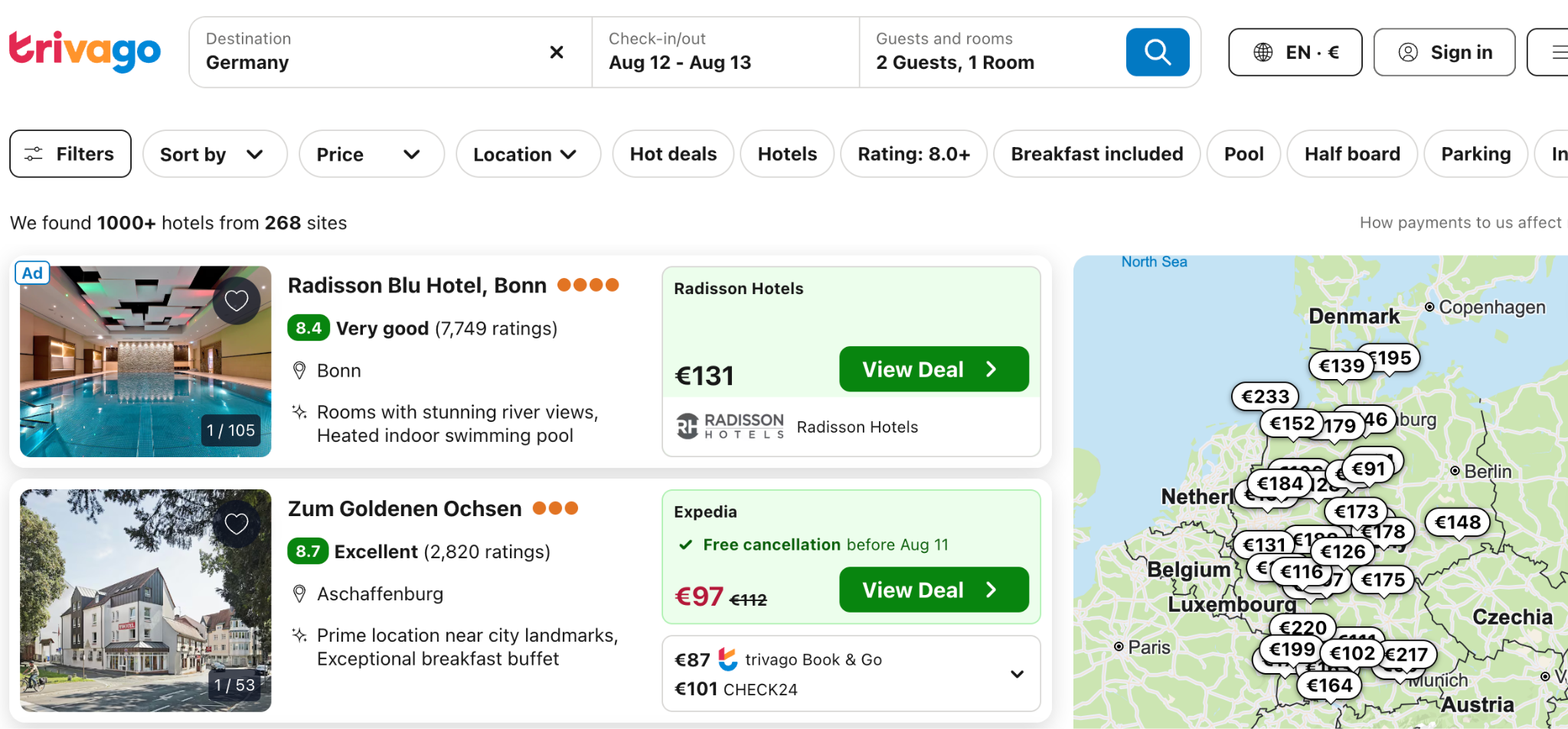
While Google Hotels and Booking.com are popular, Trivago offers distinct advantages that make it the ultimate tool for budget-conscious travelers:
1. Unbiased Metasearch Power
When you search on Booking.com, you only see prices that Booking.com offers. However, another platform (like Agoda or Trip.com) might have the exact same room listed for $30 less per night due to regional promotions. Trivago exposes these price gaps instantly, side-by-side.
2. Clean, Distraction-Free Experience
If you’ve ever used Booking.com, you know the frustration of constant pop-ups („5 people are looking at this room!„, „Only 1 left at this price!„). Trivago prioritizes a clean, transparent layout focused strictly on comparing rates, reading aggregated guest reviews, and picking the right deal without high-pressure sales tactics.
3. True Aggregated Ratings
Instead of relying on reviews from just one platform, Trivago pulls guest ratings from multiple sources across the web. This gives you a much more honest and accurate picture of the hotel’s quality.
The Verdict: How to Get the Best Rate
- Use Booking.com if you already have high-tier loyalty status (like Genius Level 3) and want to book directly on one platform.
- Use Google Hotels if you are casually browsing a city map to see where hotels are clustered.
- Use Trivago if your main goal is never overpaying for a hotel room.
By scanning hundreds of booking sites simultaneously, Trivago ensures you never leave money on the table.
👉 Click Here to Compare Hotel Deals across 100+ Sites on Trivago Now!